

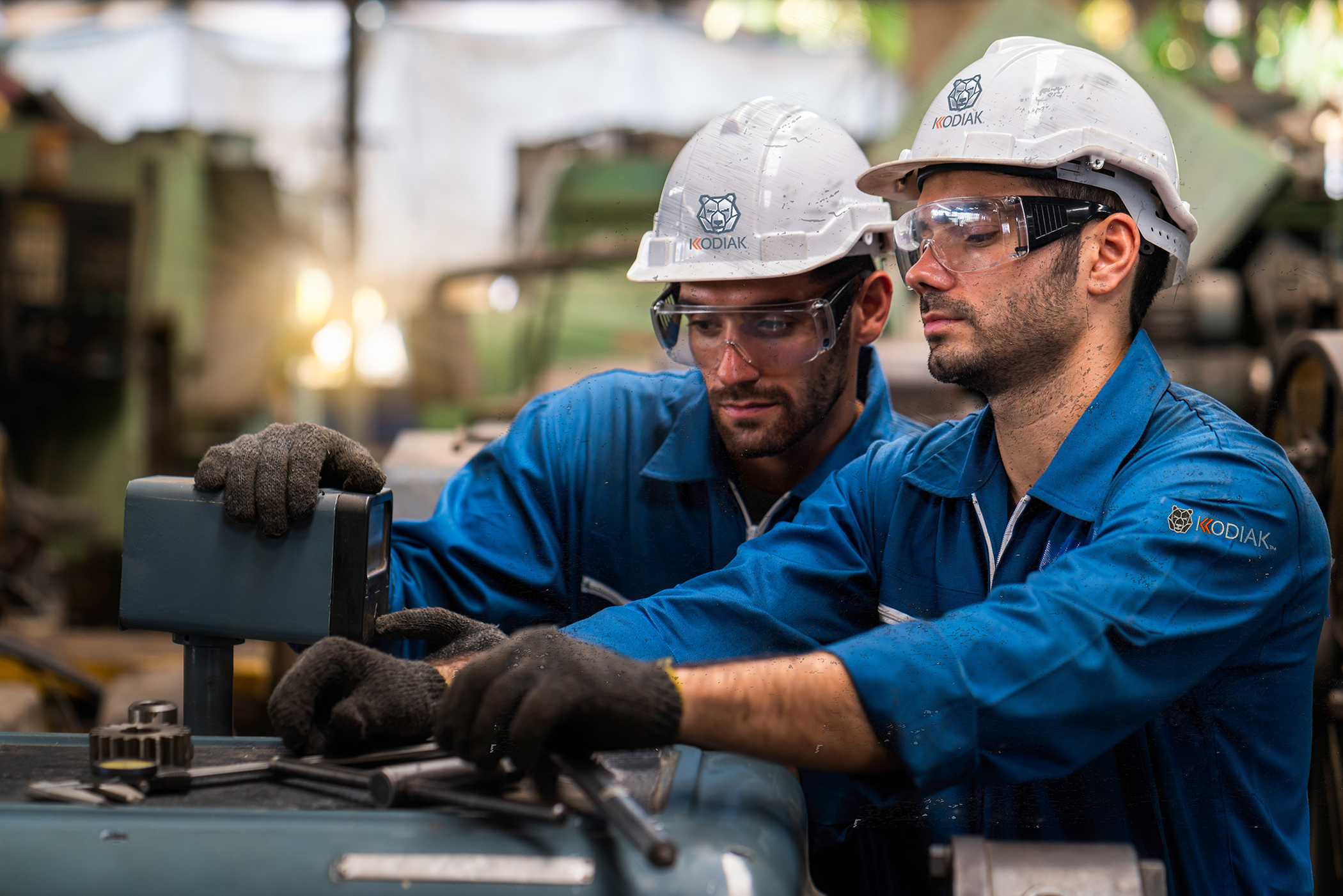
Industrial Millwright Jobs Are Critical for Job Site Success
When you walk through a factory, a high-tech data center, or a power plant, you are surrounded by complex machinery expertly installed and maintained by millwrights. Understanding the role of an industrial millwright is essential for any project manager or contractor working with mechanical systems. Millwrights make up the core of many different construction projects. Whether it is a new construction project requiring the installation of a massive generator or a retrofit of an existing assembly line, the millwright ensures the equipment is installed perfectly. Learn more about the importance of having experienced and qualified millwrights as part of your labor force, then contact KODIAK Labor Solutions to discover how we can help you staff them.
What Is an Industrial Millwright’s Job?
A millwright’s scope of work varies depending on the project’s needs. However, they are trained and experienced with assembling, dismantling, repairing, and moving complex industrial equipment and systems. Their expertise enables them to interpret complex manuals, diagnosing issues that could halt production lines worth millions of dollars. Millwrights are typically hired as contractors for a specific period, usually a few days or weeks, during a critical phase of the project that requires their expertise. Regardless of the project, experienced and certified millwrights are dedicated to maintaining a safe and smooth workflow on your job site.
Daily Tasks a Millwright Performs on Your Worksite
The day-to-day for millwrights is rarely repetitive. Their objectives are constantly changing depending on the type of job site and project phase. Learn more about the core tasks that define their trade:
- Interpreting Blueprints and Schematics – Before work on any mechanical system can begin, a millwright spends a significant portion of their time reading and interpreting highly detailed blueprints. The schematics enable them to calculate loads more accurately and plan the layout of equipment to ensure it fits the facility’s footprint and operational flow. Interpreting blueprints is a crucial step in preventing project delays and ensuring timely completion.
- Precision Installation and Alignment – Heavy machinery installation is one of the most essential roles of a millwright on your worksite. These highly sensitive systems require precision installation to ensure efficiency and prevent premature wear or even catastrophic failure. Millwrights possess the skills and tools necessary to ensure precise alignment and installation, facilitating safe and efficient operation.
- Predictive and Preventive Maintenance – Millwrights are responsible for analyzing data and determining the maintenance schedule for critical installations to minimize the impact on production. Their insight allows them to identify problems before they lead to complete failure. They perform routine preventative maintenance, ensuring the system runs efficiently.
- Rigging and Hoisting – Moving massive industrial components requires an understanding of physics. They calculate the center of gravity, select the appropriate rigging gear, and execute the lift using cranes and forklifts to precisely and safely relocate systems.
- Decommissioning – Whether the job requires dismantling machinery to make space for an upgraded system or the machinery is being decommissioned, an experienced millwright can handle the task. They will disassemble the machine, properly document the process and parts, and then move it.
- Upgrades and Retrofits – Millwrights play a critical role in upgrading and modifying existing mechanical systems to improve efficiency and performance. Their expertise minimizes downtime during retrofits, thereby reducing facility interruptions.
What Construction Sectors Do Millwrights Serve?
Millwright is a versatile profession that can be found in a wide range of construction sectors across the country. Their skills are transferable, allowing them to work in diverse environments that utilize heavy machinery and complex systems. Learn more about the job sites that require the experience and knowledge of a millwright:
- Mission Critical – Data centers, hospitals, and government facilities rely on critical systems, including power infrastructure, for 24/7 operation. Millwrights ensure these essential facilities remain operational.
- Commercial Construction – Commercial buildings, such as airports and skyscrapers, rely on mechanical systems, including industrial HVAC systems and conveyors. Millwrights are necessary for the assembly and installation of these essential systems.
- Renewable Energy – Millwrights are at the forefront of the green revolution. They’re knowledgeable about cutting-edge technology and high-torque, high-precision rotating equipment, making them indispensable in this growing industry.
- And More – Millwrights are needed in nearly every type of commercial or industrial construction project. Their knowledge and experience in handling complex mechanical systems mean they’re trusted to install, maintain, and repair essential equipment to ensure continued operation.
Do I Need a Millwright on My Worksite?
If your construction project involves the movement, installation, or maintenance of mechanical equipment, then you will need an experienced and safety-focused millwright to complete the project. Attempting to install complex machinery without their insight and expertise will almost certainly lead to disaster. Learn more about why you must have the right millwrights on the worksite:
- Precision and Longevity – Industrial machinery costs hundreds of thousands of dollars or more. Improper installation can lead to additional stress on the equipment, reducing its lifespan and increasing the likelihood of premature failure. Your millwright ensures the system is installed correctly, protecting your investment.
- Safety Compliance – There is an inherent risk associated with rigging and moving systems that weigh several tons. Millwrights are trained in safety protocols specific to these types of project hazards, including rigging heavy loads securely, to maintain a safe work environment.
- Operational Efficiency – Time is money in construction and manufacturing. When a line goes down, every minute costs revenue. Millwrights possess the troubleshooting skills to diagnose issues quickly and the technical expertise to fix them efficiently, minimizing downtime.
Choose KODIAK for Millwright Staffing for Your Job Site
Finding the right craft professionals for your project can be challenging in today’s labor market, especially in remote locations. KODIAK Labor Solutions can mobilize a team of skilled crafts for industrial millwright jobs nationwide. Our company is rooted in the mechanical construction sector, allowing us to more easily predict your project’s needs and workforce demands, so we can better serve you. We take pride in the quality and safety focus our workforce brings to each of our partners. Whether it’s a mission-critical data center or an MEP project, you can feel confident that our millwrights will help improve job site efficiency and reduce unexpected delays.
Share this job